Search Boozehoundz

Showing posts with label Cognac. Show all posts

Saturday, November 4, 2017

Odessa Brandy - Calling Card of Ukraine


In 1863 America was in the midst of the Civil War. Meanwhile in Ukraine, the Shustov distillery in Odessa was built and was starting to make brandy. Shustov is still the largest brandy distillery in Europe, employing 350 people, with the potential to produce up to 30 million liters annually. That might seem like a lot of brandy but Ukrainians have a palate and history with it, consuming about 50,000 cases annually. The grapes used for Odessa brandy are grown in the Odessa region including Ugni Blanc (typical of Cognac), Chardonnay, and Sauvignon Blanc, grown right on their property.

I visited with Eduard Gorodetskyi, the CEO of the Odessa Brandy a few months back, whose brandy is available in the U.S. and distributed by Global Spirits. “We cannot compete against the market share held by the large Cognac houses of France but we can compete on quality and taste,” he tells me. In order to compete they distill 5% of the wine on the lees to create a silkier texture. 

Eduard Gorodetskyi
Ukrainian law requires three years minimum aging, and they use oak from France, Ukraine and Hungary. Typically they age 15,000 barrels in seven locations with their oldest barrels dating to 1966. They also make limited series production brandies strictly for the Ukraine including a stunningly good 37-year aged brandy, among many others with limited availability in just Ukraine and/or the EU. The nose of Odessa brandy is initially one of caramel and butterscotch, charred wood, vanilla, cedar, and sugared almonds. On the palate light spice and floral notes abound with butter toffee and brown sugar on the back notes. This is not a complex aged Brandy but considering the price this is very enjoyable, preferably neat.

ORIGIN: Odessa, Ukraine
PRICE: $10/ 750ML
ALCOHOL: 40%
BOOZEHOUNDZ SCORE:  90 POINTS
A 1909 Shustov Brandy ad in the local Ukraine newspaper


Thursday, October 19, 2017

The Brown Sprit from the Golden State - California Brandy Wants Your Attention


Argonaut brandies launched in July, 2017
“The current view of California Brandy is one of complete ignorance,” says Doug Frost, Master Sommelier and Master of Wine, one of only five people in the world to hold the duel titles. Frost and 30 mixologists, writers and distillers, including Paul Pacult, author of five books on American spirits, and Ernest J. Gallo, Managing Director of E&J Gallo’s Spirits Business and little ‘ol me, all came together at the California Brandy Summit in…wait for it…Fresno! Well, that’s only half true. Our day started at the McCall Avenue Distillery, then moved to Yosemite (ah, much better). The goal was to discuss, brainstorm, and, well, basically feud about brandy made from California. (NOTE: The original article with an economic focus was first published in BevRoute, Sept/2017)
Brandy, You’re a Fine Girl
30 writers, distillers, and mixologists gathered together to talk brandy
With apologies to the musical group Looking Glass and their 1972 hit “Brandy,” (a woman), brandy (the drink) is actually distilled wine. Over 25 countries produce their own version of brandy, and the best-known brandy is Cognac dating from the mid 1500s made in the Cognac region of France. The US however has its own history with brandy dating back 300 years and now California wants to take the lead in making American brandy viable once again. Wait. What? Yes, you read that right. The less than half-dozen brandy distillers in California are toying with the idea that American brandy in general, and California brandy in particular, has the potential to go toe to toe with the world’s best brandies.
Brandy’s Dandy But Liquor’s Quicker
Historically American brandy was a highly awarded, highly consumed spirit in the 1800s. Part of the reason for this was wine was unstable for long durations and as Doug Frost suggested, “Brandy is how we drank wine since the 1600s.” Domestically peach brandy was the most profitable spirit and was being distilled in the American Colonies as early as 1645. But brandy has West Coast roots before California was ever a state. The Spanish knew fermentation and distillation hundreds of years before coming to the Americas and they brought that technology with them during the late 1700s employing winemaking and distilling at several of the California missions. In fact, California missions were the only supply chain for brandy, Angelica, raisins and other foods stuff for travelers back in the day, sort of like an early version of 7 Eleven. Once the California gold rush occurred in the early 1850s railroads brought California brandy to the East Coast by 1869. However Prohibition essentially wiped out brandy. It was easier and cheaper to make bathtub gin in a few hours than to make brandy. Additionally brandy production has always suffered from labor costs: you get one grape harvest a year, ferment that, then distill. “It's a labor of love since it's the least economically viable spirit there is,” says Dan Farber, founder and distiller of Osocalis Distillery.
View From The Summit
Talking, trying brandy, talking more, and more brandy
At the summit we discussed various options for promoting California Brandy. “If brandy is not sexy then we are not making it sexy,” said Paul Ahvenainen, Master Distiller at Korbel. “I’d like to see getting lower-priced brandy on the market,” said Marko Karakasevic of Charbay Distillery whose own brandies retail for as much as $350. What to do? 


~Establish a Strong Narrative~
Brandy is a handmade product.
There are estate and single vineyard designations.
Brandy is the base for many cocktails.
Sipping brandy is an ideal after dinner drink.
Create a comprehensive trade group similar to Cognac’s Bureau National Interprofessionnel du Cognac (BNIC).

And here is where California brandy has a leg up on Cognac – freedom. Cognac is restricted in terms of grape varieties (only nine varieties are allowed) distilling methods, storage and aging techniques, even that distillation must be completed by March 31st after the harvest. California has no limits. Brandy can be made from Riesling, Grenache, Pinot Noir, Sémillon, whatever, stored and aged whenever and wherever.

Gallo, the largest winery in California, has taken the lead. But it is a lead that came about almost accidentally “30 years ago we lay down some brandies with no real intention or understanding exactly how they would come to fruition,” Ernest Gallo tells our group. Those brandies, sitting idly at the McCall Distillery in Fresno are some of the ones we taste after lunch and our first brainstorming session. That foresight helped them release their Argonaut brandies in July, 2017 priced at $38 to $50. What’s unique about the Argonaut line is that, in an effort to help consumers to understand what they are drinking, each back label contains the percentage of the grapes used, their variety, the type of still used, and how long it’s been aged. Additionally Gallo acquired the high-end distiller Germain-Robin in August, 2017, complementing their own E&J Gallo brandy portfolio, thereby strengthening California brandy distribution.

As Ernest Gallo tells me; “What sets us apart is we are California brandy made from California grapes using California wine making techniques, the most ardent structure in the U.S.” Ardent perhaps, and yes I’m a California native, but it will take more than just passion to see California brandy overcome the obstacles. As I talk with Mr. Gallo, I mention that this is really a decade-long project, right? He nods and I can tell there are mixed emotions behind that nod. Yes, he and others are committed to this cause, and also yes, it’s going to be an arduous haul to re-educate the public on California brandy. Sure, brandy might regain the crown it wore in the 1800s. Time is the great equalizer and just like those “forgotten” brandies at the McCall Distillery in Fresno, perhaps this brown spirit might strike gold once again.


Saturday, June 4, 2016

A Quick Cognac Primer – Brandy’s Dandy But Cognac’s Quicker


Cognac is still something of a mystery to most people – maybe even more of a mystery is that June 4th is National Cognac Day. Really?  Since I’ve been to Cognac, I thought I’d peel away some of the mystery and confusion surrounding Cognac. Yes it is brandy, distilled wine, and like Port and Champagne it is also a region, specifically in the Western part of France located north of Bordeaux and a three-hour train ride south from Paris. Brandy is made in many places across the globe, but anything labeled Cognac must be made in Cognac. As the old saying goes, all Cognac is brandy, but not all brandy is Cognac.

At the Martell Dsitillery
Like any product controlled by a trade board, Cognac is no different and there are quirky things that all Cognac producers must adhere to like it is "compulsory" to use copper stills, and all distillation must be completed no later than March 31st at midnight. There are about 260 Cognac houses in France - some very small like the mother and son team of Maison Dudognon and newcomers like CognacLecat (started in 2014), to medium sized houses like Frapin and Camus, to the larger and better known brands like Hennessey(251 years old), Martell (301 years old), Courvoisier, and Remy Martin.

Frapin's old blending room
In Cognac there are wine makers and grape growers in the thousands, some who make the wine and sell it; others who distill their wine and sell the eau du vie to the Cognac houses. It is a vast complex web of relationships in a small market and it involves a tremendous amount of people. My visit took me to many producers, each one with their own story and iteration and style of Cognac, which I do not detail here, or the cool history of Cognac, as that is a much longer story. Cognac typically consists of four specific tastes: floral, fruit, spice and wood. Cognac starts as wine, then it is distilled into eau du vie, then distilled a second time, and then aged…for a long time. And it is this understanding of time that gives Cognac its unique expression, and cost.

Pondering my blend at Hennessy
Olivier Paultes is the director of distillation for Hennessy, the largest Cognac producer in the world. I visited with him and blended my own Cognac, which he liked, but I’m certain he was just being kind. “What you look for is perfect harmony, just like in an orchestra, just like when you cook,” he says. Every morning at 11 a.m. he, along with the rest of the tasting committee, tastes through 50 to 80 samples. I am given multiple Cognacs from which to blend - a 1983 (smooth, clean and spicy with a moderate fruit component), a 1990 (spicy wood, butterscotch, caramel), and a 1996 (clove, apricot, apple with more upfront oak). I ponder, mull, overthink, and assemble my own concoction. Oliver calls my blend the “most round.” Another blend he calls "95% spot on," and of someone else's blend he says, "No, it's not horrible it's just strange," in that French accent which really suggests that, in fact it's not strange, it's actually horrible. Fortunately I am not a master distiller. But what a distiller does, be they from a new Cognac house like Lecat or an old standard like Martell, and what Cognac offers apart from most any other wine or spirit in the world, is an amazing concept of continuum – a life over time whereby age is the perfect compliment to the spirit.

The tasting experience at Camus
Olivier sums it up best. “What's exciting for me personally is that we will be preparing the Cognac of tomorrow; what I have just distilled now will age to be tasted in 100 years.” And that, in part, is why Cognac is worthy of your attention; it is often created for a generation not yet born, an experience far into the future, and a connection with the past that has a sense of pride and patience. VISIT COGNAC


Thursday, December 10, 2015

Hark! The Herald Angels Drink


The Holidays – a blur of parties, gifts, stress, bad drivers, and other things. So let’s simplify the gift giving process (enough with S’well bottles, gift cards, and Blue Apron) let’s focus on six top-notch liquid gifts for your loved one, for yourself, your neighbor, pastor, UPS driver, or whomever. Life is short, so drink well.

The Three Wise Wines

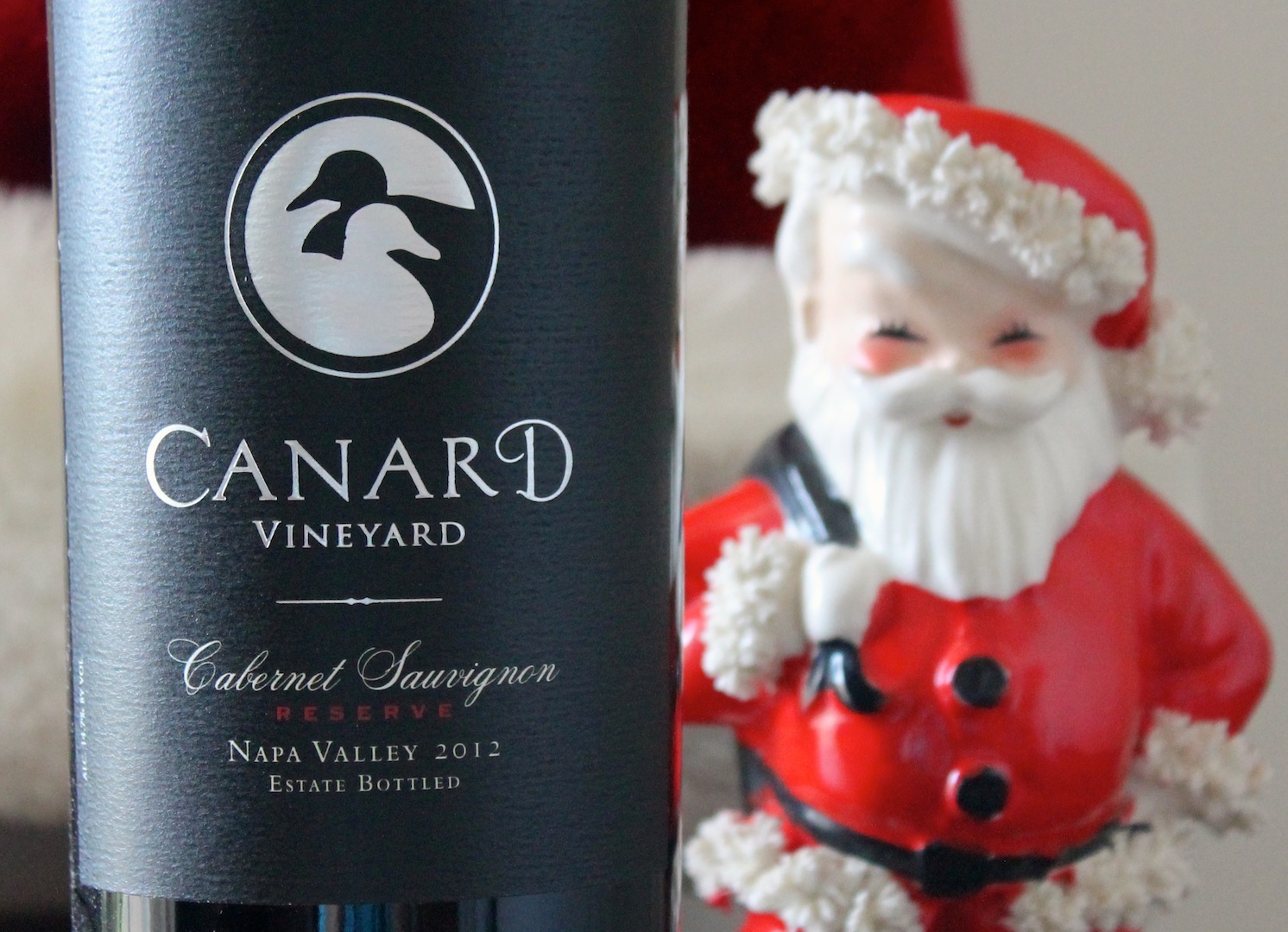
Canard Vineyard 2012 Estate Reserve Cabernet Sauvignon
Under the radar and around since their first vintage in 1984, Canard is one of those incredible finds. Canard sacrifices big yields for smaller grapes and greater concentration of flavor due to their dry farm approach. Located on the Silverado Trail they craft a rich and voluptuous Cabernet with vibrant black cherry, raspberry, black and huckleberry, with shrewd notes of cinnamon, vanilla, nutmeg and black pepper spice - a perfect balance of oak, fruit and a mild but proper acidity. This is a seamless wine that reflects exactly how dry farming can change the complexity of a wine. ($125, canardvineyard.com)

Ram’s Gate 2013 Pinot Noir Bush Crispo Vineyard
Located in Carneros, Ram’s Gate is crafting exceptional wines, though this vineyard is Russian River Valley. The nose is super ripe black cherry that gives way to rich luscious hedonistic black cherry, blackberry, black raspberry, acidity and a joyfulness in simply drinking this wine because it's just so damn good. And that is the X factor: a wine that tastes so good that you want to drink it three ways hard, fast and continuously. But do savor this wine – in fact it makes you stop whatever you're doing when you take the first sip and say, damn, I need to pay attention to this. What stands out is the dark rich vibrant fruit, more so than the oak treatment. ($70, ramsgatewinery.com)

Duckhorn 2012 Rector Creek Vineyard Merlot
Duckhorn has always been at the forefront of Merlot, even when it wasn’t popular they have continued to show how the grape could excel. Rector Creek, located just north of Yountville produces powerful Merlot grapes grown on alluvial soil. With velvety smoothness, this Merlot exudes blackberry, black cherry, a wee bit of plum, a hint of cedar, allspice and a mild acidity, which compels this wine forward. Merlot’s softer side and its food-friendly nature shine through with this compelling wine. ($95, duckhornwine.com)

The Three Wise Spirits
Hennessy VS Limited Edition Cognac
Hennessy has been making Cognac for 250 years and I had the great fortune to visit them firsthand in early 2015. Twice distilled, Cognac (actually a brandy) has reached mythic heights in part because the aging process can take decades. Wine is distilled into eaux du vie, which is then distilled a second time and aged. The VS Limited contains more than 40 different eaux-de-vie, aged up to eight years. This smooth refined Cognac offers a bite at the end, but it is full of spice, cedar and amber notes from the oak casks, a slight floral nose with violets and rose petal and a caramelized nut note. It’s smooth, sweet, mature and complex, as Cognac should be. ($45, hennessy.com)

Jonnie Walker Select Series Rye Cask Finish
The first iteration in the Johnnie Walker Select Cask series (traditional whiskies finished in different casks than they were aged in) is a rye cask finish which brings together a blend of whiskies aged for 10 years in new American oak barrels and then finished in older American rye barrels, or casks. Light malt, vanilla, and honey slowly infiltrate the palette and then there is the noticeable oak. Yes the rye is evident but most noticeable is the sweet peat and smoke that permeates all around followed by sugared almond, citrus, soft resin and a spicy, floral finish. ($45, jonniewalker.com)

Teeling Irish Whiskey
The Teeling family traces their distilling history back to 1782, but it was only 1987 when John Teeling reopened a distillery in Dublin with the goal of producing age-old Irish recipes that had been long forgotten. This is a soft and aromatic whiskey with notes of citrus, resin, cinnamon, vanilla, cedar and rose water. Unlike many brown spirits, there is no harshness to this, it is an elegant, gracious and personable whiskey, finished in rum casks and easy to drink, offering a maturity you wish all whiskies had. ($40, teelingwhiskey.com